

Customer Service Hotline:
+8613261677119
+8613261677119
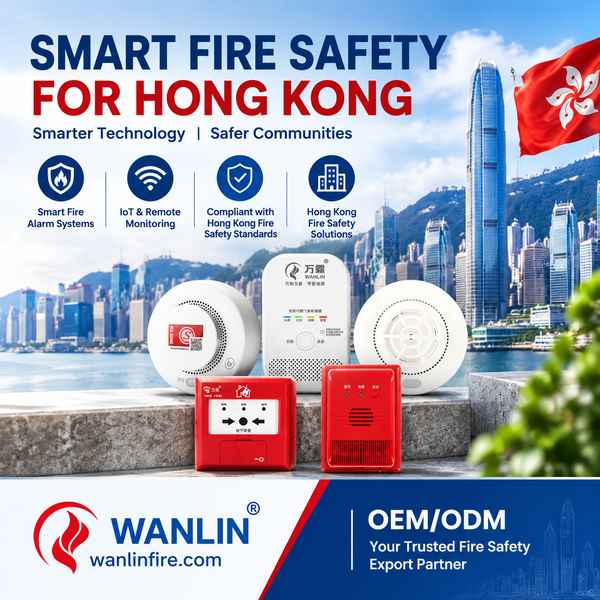
Owners rarely get one clean answer, because the scheme touches legislation, structure, radios and neighbours at once. The common corridor is also somebody storage space, and everybody knows it. A programme on To Kwa Wan Road, in Kowloon City, Hong Kong, needs equipment that can be fitted in occupation, commissioned phase by phase and evidenced with documents somebody else signs. That is what this page is written for: overseas distributors, regional contractors and sourcing teams looking for a China manufacturer that supplies into Hong Kong retrofit programmes rather than a catalogue that stops at the port.
TL;DR: The qualifying route sits in Fire Services Department Circular Letter No. 3 of 2026 read with the Fire Safety (Buildings) Ordinance Cap. 572. Component documentation commonly referenced includes EN 54-25 for the radio linked parts, EN 54-7 for the smoke sensing element, EN 54-5 where heat heads are used, and local radio equipment rules for the operating band, with the acceptance decision resting with the authority rather than with any supplier. Everything below is written from the standpoint of the factory, including what we do not do, because a supply programme that survives an authority check is worth more than one that survives a sales call.
Wanlin Fire supplies into these programmes as the manufacturer, not as the local contractor. The statutory signing sits with the registered fire service installation contractor appointed for the building, the transmission service sits with whichever provider holds the link, and we write that split into every quotation so nobody discovers it at handover. Sourcing terms, minimum quantities and local code submittal support with per-configuration technical files, radio compliance evidence for the destination and national registration support for the importer of record are stated per programme rather than assumed.
The file starts with a Fire Safety Direction rather than with a quotation. The people involved were Peter Yeung, Property Manager, working alongside whichever contractor the owners appointed, and the constraint was access rather than technique. The building sits in Kowloon, which decides nothing about the law and almost everything about the practical programme: trading hours, lift availability, how long you can stand on a landing with a ladder, and which neighbours speak to whom.
Before quoting we walked it. What they were actually buying was certainty about dates, not discount on units. First, the structural question nobody wanted to answer in writing. Second, whether the existing supply positions could carry the equipment without new builders work. Third, how many units could realistically grant access in the window available. Fourth, who was going to read the monthly report once the novelty wore off.
Net result: the common parts were completed and commissioned as a defined phase, the dwellings followed as appointments were granted, and the outstanding list stayed open as a written document rather than becoming a rumour. The channel margin on this configuration was quoted at about 37 percent. Those figures are one building, not a benchmark, and we will not pretend otherwise.
Field case: A quotation on To Kwa Wan Road described compliance in general terms and then could not say which documents covered which parts. The point worth keeping is not that the equipment worked; it is that the failure had a name, a location and a date on it, which is what let it be dealt with in one visit instead of three arguments.
Three failure modes account for most of what goes wrong here. The block on To Kwa Wan Road qualified on height and then found half its units locked to outsiders. What follows is drawn from retrofit work rather than from product literature, and it includes the parts suppliers generally leave out.
None of these are solved by a better detector. They are solved by sequencing, by writing things down, and by being honest about what a building can actually grant you in a given month. Where Hong Kong Six Storey Target Building IoT Fire Detection Package helps is narrower and more useful than most marketing admits: it removes the structural and spatial blocker from the programme, so the remaining problems are solvable by people rather than by concrete.
With immediate effect from 30 April 2026, the Fire Services Department published its acceptance of an Internet of Things fire detection system together with portable fire extinguishers as an alternative to the hose reel system and the manual fire alarm system for composite and domestic buildings of six storeys or below covered by the Fire Safety (Buildings) Ordinance, Cap. 572. The clause that everybody misreads is the scope: those two requirements are what get substituted. Sprinkler requirements, emergency lighting, automatic interruption devices for mechanical ventilation and every other applicable requirement stay exactly as they were.
The circular describes four qualifying conditions, and all four have to hold at once. The building falls under Cap. 572. A Fire Safety Direction has been issued for it. The building is a composite or domestic building of six storeys or below. Owners' consent covers detectors in the common parts and in each unit, transmission and alarm equipment in the common parts, and a suitable number of dry powder extinguishers on every floor.
| Item | Hose reel and manual alarm route | Detection and extinguisher route |
|---|---|---|
| Works duration | One to two years | Around two weeks |
| Works cost | Around HK$600,000 | Around HK$200,000 |
| Structural and spatial limits | A tank, a pump set and weight to carry | No such constraint stated |
| Fire detection | Manual | Automatic and manual |
| Maintenance oversight | Annual inspection | Real time monitoring plus annual inspection |
| Scope substituted | Not applicable | Two requirements only, the rest unchanged |
Every figure in that table is a comparison published in a department briefing, quoted here so a buyer knows what kind of order of magnitude the route was presented against. They are not our prices and not our programme durations. Real buildings are quoted individually, because structure, access and phase boundaries move those numbers in both directions.
The chain is short and worth understanding before anybody signs anything. A multi sensor detector inside a unit or in the common area sees smoke, carbon monoxide or both and sends a small message over localised radio to the gateway on that level. The gateway carries the manual call point and the alarm sounder, holds two SIM cards on two different mobile networks, and puts the message onto external mobile communication. The monitoring platform receives it, identifies the device and its recorded position, and both sends it onward through the Computerized Fire Alarm Transmission System to the Fire Services Communications Centre and duplicates the signal to the department server through an application programming interface. Frontline crews then use a mobile application at the scene.
Two of those hops are not hardware. The platform and the transmission link are services held by named organisations, and the published demarcation of responsibilities says plainly who does what: the registered fire service installation contractor installs, maintains, inspects and repairs the fire service installation components and issues the FS 251 certificate for them, while the transmission service provider provides and maintains the communication network that carries alarm signals onward. The service provider coordinating everything is expected to be a single point of contact, to submit site inspection and feasibility reports, and to report performance monthly.
Three parties read the same system and need different things from it: the property management office needs to know what to do at three in the morning, the owners corporation needs evidence it can table, and the maintenance contractor needs a list rather than a description. Writing all three into the handover pack costs one page and prevents most of what later goes to correspondence.
The published timing expectations run from sensor to platform display, and they are short. Fire and pre alarm arrive within ten seconds from mains powered equipment and twenty seconds from battery powered equipment. Fault arrives within twenty seconds regardless of supply. Status arrives within a hundred seconds regardless of supply. Heartbeat polling runs at thirty minutes for mains powered transmission equipment and twenty four hours for battery powered equipment.
Resilience is layered rather than single point, and it is worth knowing where the layers are. Dual SIM failover covers one mobile network failing. Redundant gateways cover one radio bridge failing. Dual power architecture covers supply failure at the gateway while long life cells carry the detector positions. Multi sensor fusion with two stage logic covers the false call that otherwise gets a detector removed. Each layer is dull on its own, and availability calculations quietly depend on all of them holding at once.
On maintenance, the obligation is explicit and frequently overlooked: defects identified in the fire service installation components are repaired within thirty days, failing which the matter is referred to the department by the contractor, and work is carried out strictly against approved drawings with completion records kept. None of that sits with the factory, and any supplier blurting that they handle it should be asked for the detail in writing.
Coverage fails quietly and it fails the same way nearly everywhere: the count came from a floor area before anybody walked the building. A reinforced slab is the single most effective thing these buildings do to stop a radio signal. A wet and salt laden party wall does something similar in pre war stock. Above a false ceiling shared by several lettings, the path is decided by what the grid itself is doing.
Where a block carries heritage status or appears on a graded list, expect separate approvals that have nothing to do with the equipment itself. The method that works is unglamorous. Tenants stay put through it, many of them elderly residents, and the retrofit usually runs alongside whatever renovation the block already has planned. Take what drawings exist, walk the building, place a gateway, measure, move it until the path is real, and record what was done. That record becomes the commissioning sheet, and it is what decides whether the coverage designed is still the coverage in place after the next tenant fit out. It went quiet for 12 days while the owners corporation argued about the levy. Then a second question gets answered properly rather than hopefully: A decision that everyone expected to take a quarter landed in 12 days once the structural question was settled.
Below ground matters most and is skipped most often. A basement level often has no path up at all, so the answer is a gateway on the level rather than an antenna fight with the slab. Storage levels and back of house areas are the positions least likely to appear on any drawing somebody hands you. Rooftop plant enclosures, refuse rooms, switch rooms and meter cupboards are walked the same way, because a survey either covers the building or it does not. Antenna extension fixes one position with a known problem; it does not rescue a gateway sitting in the wrong place, and we price it per unit because that is how tenders ask for it.
This range exists because conventional works ask these buildings for space and time they do not have. For a block of six storeys or below, the WANLIN-860 removes the tank and the pump from the critical path. The WANLIN-860 sits at the centre of this configuration, and it is specified from the building rather than from the brochure. Whether wireless detectors are interconnected across units is a decision the appointed contractor records in the drawings, not something a supplier decides on site.
| Parameter | Specification |
|---|---|
| System reference | WANLIN-860 Hong Kong Six Storey Target Building IoT Fire Detection Package |
| Product category | Package built for target buildings of six storeys or below that would otherwise have to carry hose reels and a manual alarm system |
| Radio network | LoRa radio from every device to the floor gateway, dual SIM cards on separate mobile networks, and encrypted backhaul to the monitoring platform |
| Detection and trigger | Multi sensor detection inside each unit near the entrance plus at least one head per floor in the common areas, with manual call points integral to the gateway |
| Supervision and health check | Fault, low battery and offline conditions are reported separately from fire, so the platform distinguishes a device that needs a visit from a device in alarm |
| Protocol and integration | Monitoring platform with two way API exchange and a mobile application for fire crews at the incident scene |
| Notification path | Local alarm sounder at the gateway together with signal transmission to the platform and onward alerting through an approved transmission route |
| Alarm behaviour | Pre alarm and fire alarm stages, latched until reset at the device or panel, with the investigation rule written into the site evacuation plan |
| Power supply | Gateway on mains supply with standby battery, detector heads on long life primary cells, all endurance figures stated per model datasheet with their conditions |
| Housing and mounting | IP rating stated per model datasheet, labels carrying the device identity and the recorded room or unit reference |
| Installation pattern | Common parts completed first and dwellings fitted by appointment, with portable extinguishers placed per floor as part of the same programme |
| Environmental rating | IP rating stated per model datasheet, with IP67 built on the gateway, alarm unit and call point positions where the configuration is specified for them |
| Frequency plan | Band and channel plan set for the operating region, stated on the order because the same hardware is not lawful at the same power everywhere |
| Coverage planning | Gateway count and placement taken from a radio survey rather than from the floor area, with the result recorded on the commissioning sheet |
| Maintenance and testing | Automatic self-check with fault, low battery and offline conditions reported separately, test interval set by the site operator and recorded on the drill record |
| Export documentation support | Technical file prepared to support submission by the registered contractor and the importer of record, including radio compliance evidence for the operating region |
| Certification documents | CE, RoHS and REACH documentation per applicable model, with EN 54-25 route papers on the wireless configurations and EN 54-7 or EN 54-5 papers on the detector heads, certificate number provided on request |
| OEM and ODM options | Logo, part number, packaging, manual languages including traditional Chinese where required, label artwork and platform identity string configurable |
| Full datasheet | Complete radio, electrical, battery and environmental data provided per model on request |
| Warranty | 24-month |
| Scenario | Model | Why it fits |
|---|---|---|
| Target building served with a Fire Safety Direction and no room for a water tank | WANLIN-860 | No pump room, tank base or structural check sits between the owners and compliance |
| Small block where the owners cannot fund a hose reel installation | WANLIN-307 | The detection package is scoped per unit per floor, so the cost answer is a number rather than a levy nobody agreed |
| Building whose common corridor is too narrow for a conventional installation | WANLIN-222 | The call point and sounder sit in the gateway on the wall instead of in a new service void |
| Portfolio of several small blocks under one management office | WANLIN-868D | One survey method and one spares list cover every address in the group |
Each statement is made per applicable model or configuration, and where a value is not ours to state, we say so instead of filling the gap with confidence.
Buyers stay with us for four reasons, none of which is price alone. the first of them is honesty about the boundary, because every other claim gets cheaper once that is straight.
Local acceptance rests with the authority and is certified by the registered fire service installation contractor appointed for the building. We are the factory. We do not sign statutory submissions, we do not issue certificates in place of that contractor, and we tell clients the same thing before the first order rather than after the first question. What we do supply is the technical file the submission depends on: per model documentation, radio compliance evidence for the operating region, the frequency plan stated on the order, and a written statement of which documents cover which parts of the scheme.
The documents named in submittals for these programmes depend on the configuration ordered, and the honest answer is always the same: the reference list belongs on the quotation rather than in a paragraph. What we issue is stated per applicable model, per ordered configuration and per the components actually fitted, and we write which parts of a scheme each document covers.
We suggest any certificate number issued to us be checked with the issuing body directly. We say that because we would rather lose a quotation to a careful buyer than win one against a buyer who later discovers the number was read off a photocopy.
| Reason | What it means on a live site |
|---|---|
| Factory direct supply | Labels, part numbers, manual languages and firmware identity strings are set at the plant rather than added afterwards |
| Per model evidence | Battery, sensing and environmental figures arrive with their conditions attached |
| One radio plan per order | Spares from one batch stay interchangeable years later |
| Honest scope statements | The boundary between installer, platform operator and transmission provider is written, not implied |
| Phased delivery | Common parts and dwellings are two commissionable phases with separate records |
Around 14 district level retrofit enquiries have come through our export desk in the last twelve months across Kowloon City, Hong Kong and neighbouring districts, which is a small number and a real one. Roughly 31% of those buyers came back for a second building, and that repeat rate tells you more about the handover than any specification does.
Five steps, in the order they actually happen. the sequence below is the one that actually happens, including the two steps everybody tries to skip.
First comes the document trinity: drawings, access reality and the Fire Safety Direction itself, read before a single device is discussed. Second is the radio survey, which produces gateway counts in writing. Third is quotation against that survey, with phase boundaries drawn so completion can be defined. Fourth is production with configuration locked. Fifth is fitting inside agreed access windows. Sixth is commissioning, certification by the appointed contractor, and handover of the register, readings, drill procedure and maintenance terms.
We are recruiting local partners and export trade counterparts for these programmes, and we would rather start with one building and be judged on the second.
Three people who worked this programme, quoted without tidying up.
I have worked with suppliers who answer in a week. This one answered the boring questions first, which is rarer than it sounds.
- Terence Mak, Property Development Manager, Chai Wan Road, Eastern District, Hong Kong
What I needed was a number for the gateway count in writing. That is what decided Kwong Fuk Road going ahead.
- Dominic Reid, Fire Safety Consultant, Kwong Fuk Road, Tai Po, Hong Kong
The registered contractor we appointed had everything except a reason to trust the file. The per model documents changed that conversation.
- Peter Yeung, Property Manager, To Kwa Wan Road, Kowloon City, Hong Kong
A: On the published arrangements, an accepted Internet of Things fire detection system together with portable extinguishers stands in place of the hose reel system and the manual fire alarm system for qualifying target buildings of six storeys or below. Nothing else in the ordinance is replaced: sprinkler requirements, emergency lighting, mechanical ventilation cut off and every other applicable measure stay exactly as they were, and anybody telling you otherwise should be asked to put it in writing.
A: The building has to be one the Fire Safety (Buildings) Ordinance covers, a Fire Safety Direction has to have been issued for it, it has to be a composite or domestic building of six storeys or below, and the owners have to agree as a body to detectors in the common parts and in every unit, transmission and alarm equipment in the common parts, and extinguishers on each floor. A building that fails any one of the four cannot use the route, whatever the hardware can do.
A: The chain is detector to gateway, gateway to monitoring platform, then platform onward to the Fire Services Communications Centre over an approved transmission link, with all signals also duplicated to the department server over an application programming interface. The part an owner should nail down before signing is who operates the platform and who holds the transmission service, because those are separate contracts from the equipment.
A: The published timings are short and they are worth reading before comparing quotations: fire and pre alarm within ten seconds from mains powered equipment and twenty seconds from battery powered equipment, fault within twenty seconds either way, status within a hundred seconds, and heartbeat polling at thirty minutes or twenty four hours depending on supply. Those figures are performance requirements on the system, and we quote against them per configuration rather than as a marketing claim.
A: A commissioned system with device identities recorded against locations, a certificate from the registered contractor, extinguishers placed per floor, and a maintenance arrangement with the thirty day repair rule built in. What is worth insisting on is the monthly performance report, because that is the document that shows whether the availability you were sold is the availability you have.
Hong Kong Six Storey Target Building IoT Fire Detection Package is supplied from China into Kowloon City, Hong Kong Hong Kong smart building retrofit programmes as one defined scope: equipment, configuration, documentation and phase by phase commissioning support, with the statutory signing left to the registered fire service installation contractor appointed for the building. hong kong six storey target building iot fire detection package asks this question in every district, and the answer that keeps a programme moving is always the same two things: a survey taken in the real building, and responsibilities written down before fitting starts.
Lead times are stated per configuration, 12 days is the typical window quoted once configuration is locked, and 5 months of commissioning support is included as standard rather than sold as an extra. Evaluation samples are built on the production configuration rather than on a bench build, after sales support runs through named contacts, and export packing is specified per destination rather than improvised at the dock. Nothing here is a substitute for the local submission, and nothing here promises an authority decision.
Contact Wanlin Fire
Email: wanlinfirecontrol@163.com
Export hotline: +8613261677119
Website: https://www.wanlinfire.com
Factory: Wanlin Group, Building B, Building 1, Beisida Medical Device Building, 28 Nantong Avenue, Baolong Community, Baolong Sub-district, Longgang District, Shenzhen, Guangdong, China
Last updated: September 28, 2026
Title of this article: Best Hong Kong Six Storey Target Building IoT Fire Detection Package Manufacturer | To Kwa Wan Road, Kowloon City, Hong Kong - Wanlin Fire